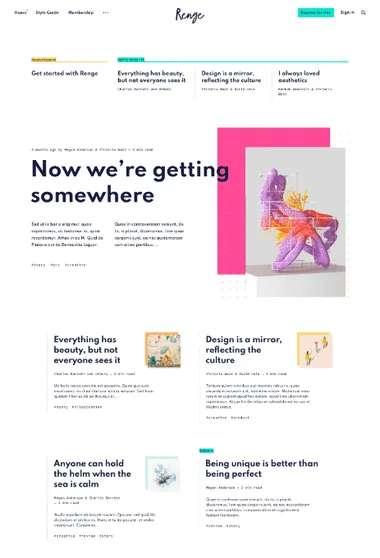
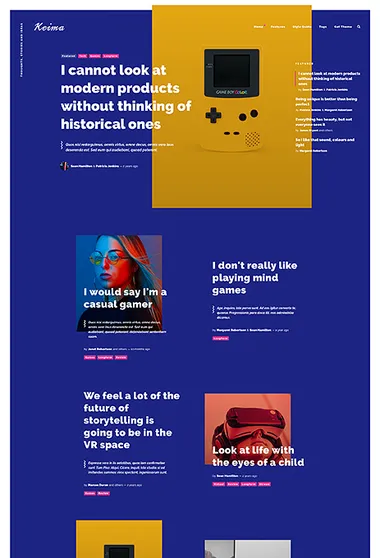
Ghost themes for journals
Let the writing set the pace. Build a thoughtful archive around essays, observations, and ongoing work.

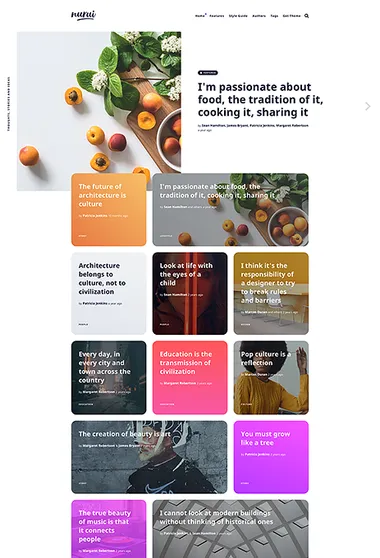
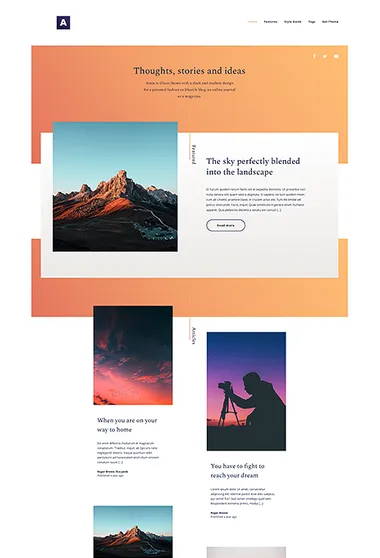
A journal becomes meaningful through accumulation rather than constant novelty. Dates and recurring subjects connect essays, field notes, or visual observations into a record of a practice still in motion.
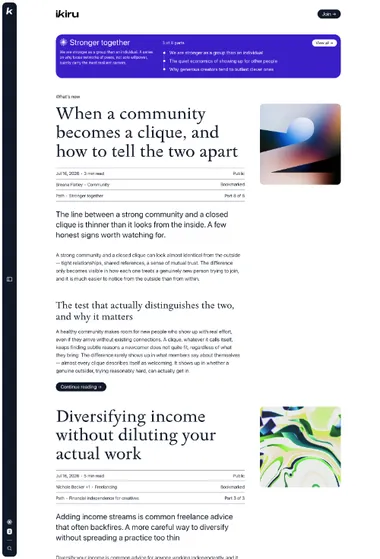
Ikiru. Let one entry lead naturally to the next. Extended previews and guided Paths make sequence visible before the reader opens a piece.
Ikiru brings part of the reading onto the journal’s homepage. An extended preview can reveal a chosen passage before an entry is opened, allowing voice and argument to shape the archive. Featured posts and Paths become landmarks in that vertical flow, while imagery can remain secondary when the journal is carried by text.
A Path gathers field notes, essays, or a serialized inquiry beneath one introduction and places them in a visible order. Readers can follow the sequence from the side rail or move between entries directly. Search and saved articles remain close, and longer pieces may add a table of contents and reading progress. Each new entry can extend an existing line of thought.
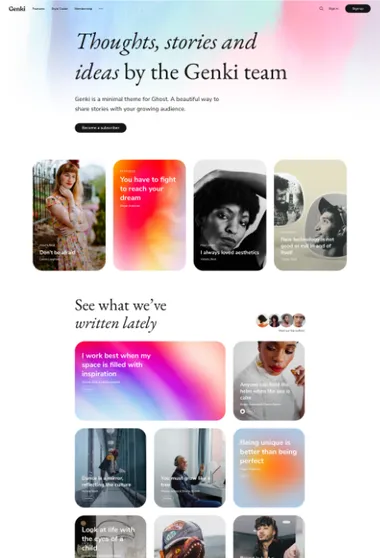
Genki. A journal can open with its subject or practice. A large statement and changes in card scale set selected entries apart from the regular archive.
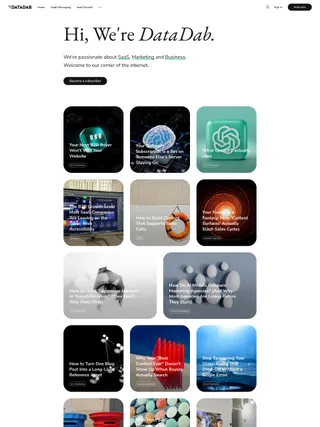
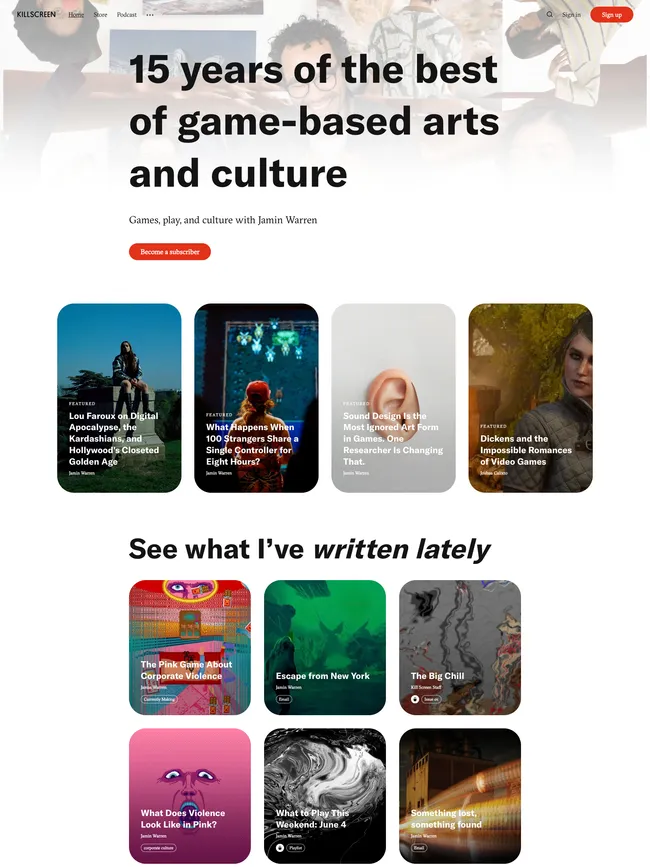
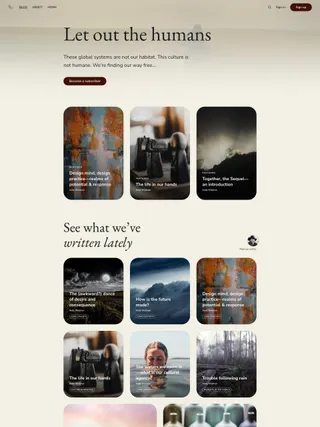
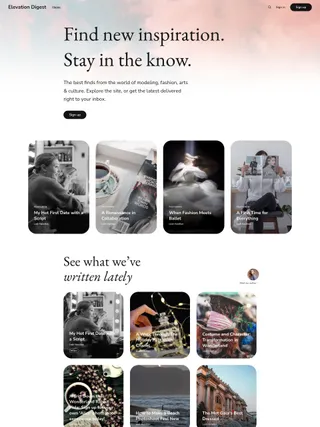
Featured pages and selected posts can introduce lasting work before the latest entries. One post may grow larger or place its title over imagery, giving a significant essay or visual note more room without reorganizing the archive. Article openings can shift the balance between typography and imagery as the journal develops.
Ikken. Let photographs and written observations accumulate side by side. The alternating feed gives each entry the space of an editorial spread.

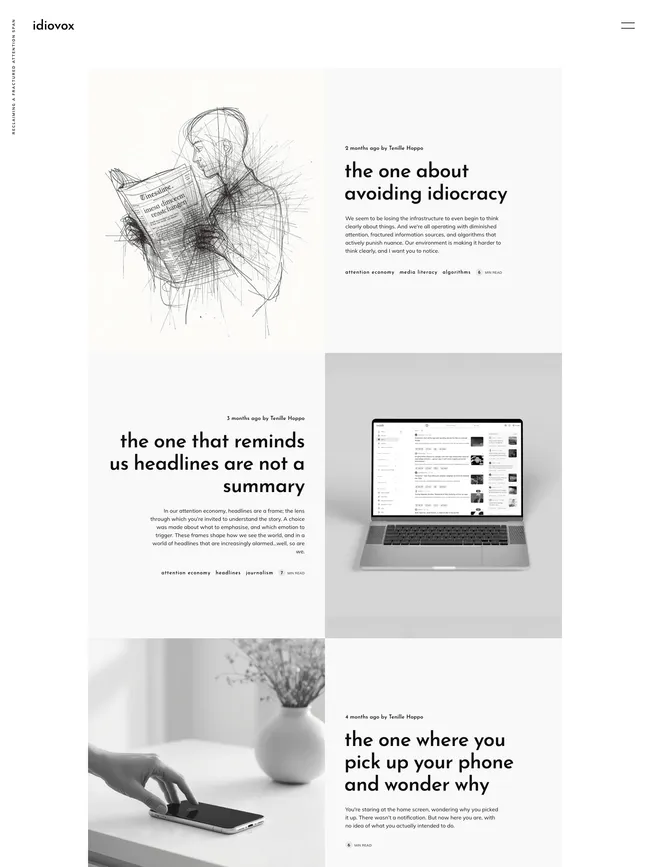

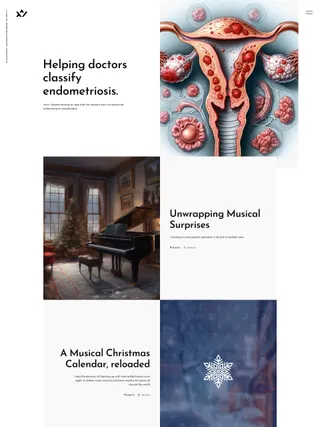
A wider or image-free entry can interrupt the sequence, giving a longer reflection a different pace. Featured pages and posts receive a full-scale opening, useful for an enduring introduction or a project that should sit before the chronological archive.
Topics and optional author discovery stay inside the expandable panel, preserving the open surface around the images. Light and dark presentations change the atmosphere while the alternating structure remains the same. Individual entries can look distinct and still belong to one continuous visual record.